
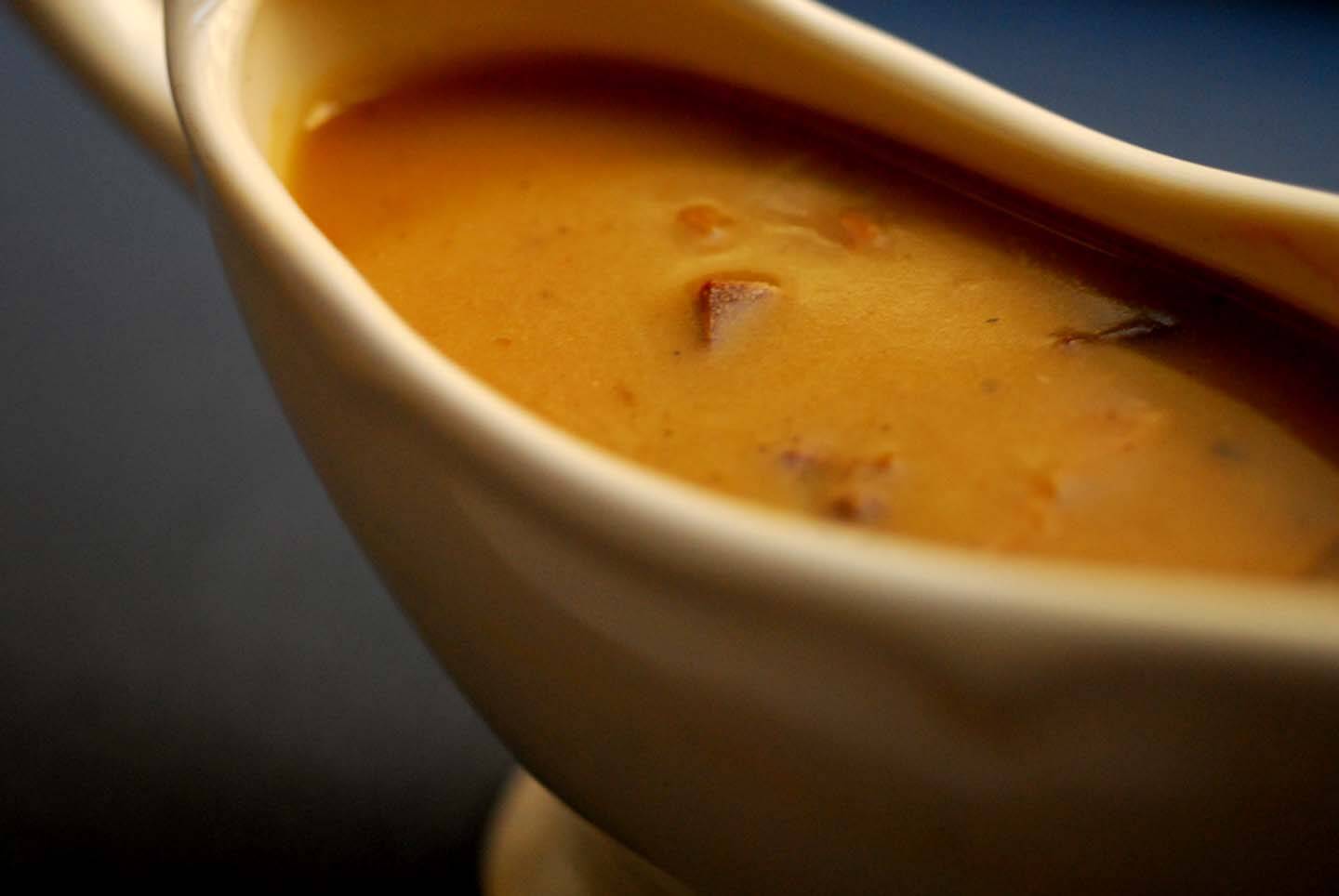
A badly burnt bird, but great giblet gravy
One of the best things about Thanksgiving dinner is the leftovers. But since I’m traveling to Texas for my feast, I sadly won’t have pounds of turkey calling on my culinary creativity the days after Thanksgiving. Enter a turkey sale at Whole Foods last weekend. There, nestled amongst the mega-birds, was one little 10-pound free-range, vegetable-fed, never-been-frozen turkey, and I impulsively decided to buy it and roast it so I’d have enough for my own leftovers in New York City.
How hard could it be? While I’d only roasted a turkey once before many years ago, with questionable results no less, these days I’m now much more capable in the kitchen. Besides, I roast chickens all the time and a turkey couldn’t be that different. I was clearly deluded.
After scouring my neighborhood’s cooking shops for a roasting pan, I found a decent one on sale at Macy’s that was part of the new Martha Stewart line of cookware. It wasn’t coated in any nonstick nonsense, and was sturdy and attractive to boot. I was on my way! Now I just needed a method. But instead of calling the turkey pros in my family, I opted to (foolishly) figure it out on my own.
I read about 30 recipes on the proper way to roast the bird, and that’s where I got into trouble. Applying just about every technique I could find—brining, breast-side down, breast-side up, no basting, coating the skin in a chile puree and continuous cooking at a very high temperature—I was left with an over-done bird with meat as tender as sun-baked leather. Sure, some of the meat was edible, but if you decide to leave a tiny turkey in the oven at 400 degrees for 4 hours, don’t expect it to be juicy and succulent.
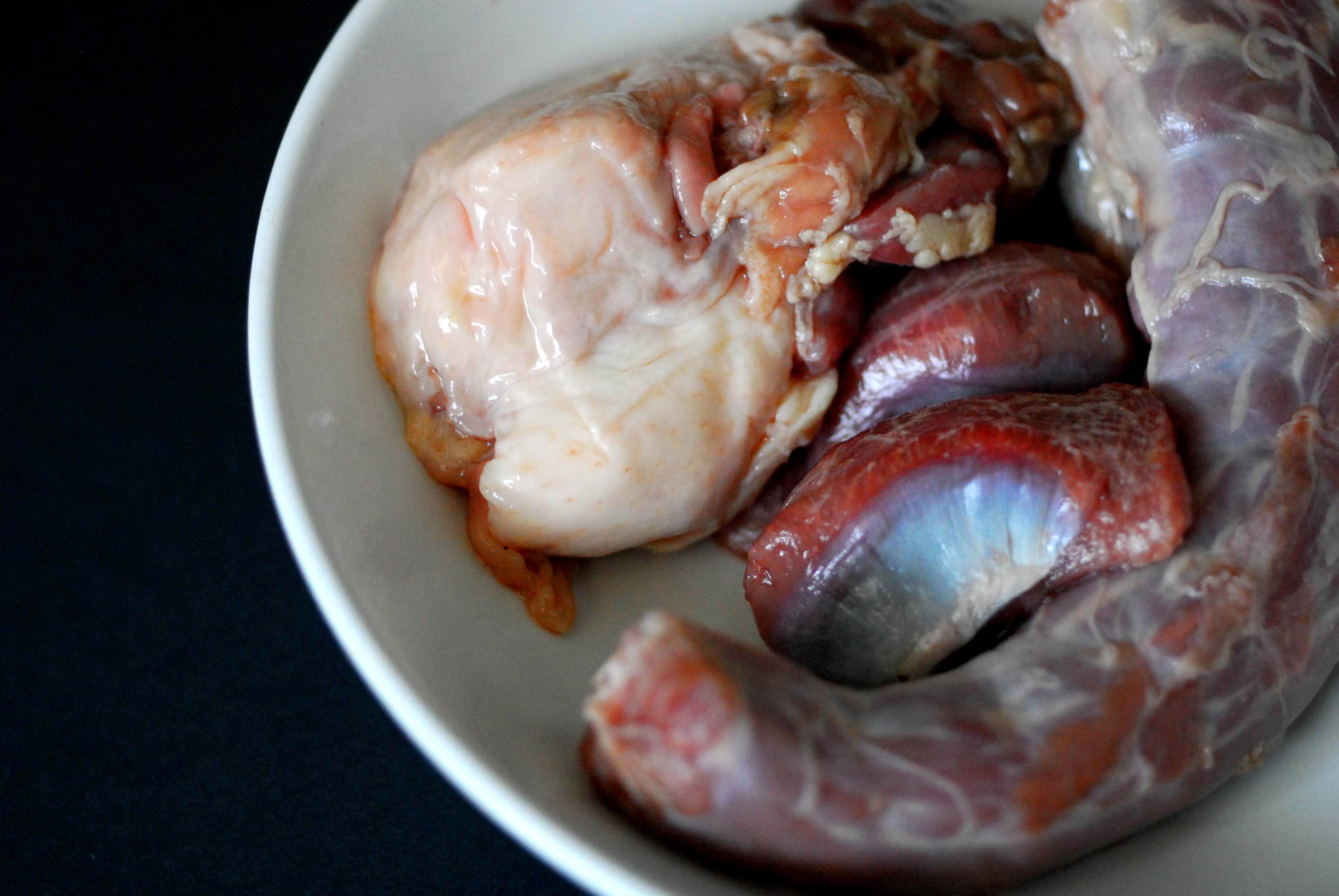
But one bright spot in my ill-conceived turkey adventure was the giblets. What many consider optional offal, (I was shocked at how many recipes said in reference to these innards, “Discard”) is the highlight of my dad’s Thanksgiving. For generations, he and his family have been making some of the finest tasting gravy out of these ugly bits, a concoction so savory and rich that no vehicle is even necessary—you can eat this with a spoon.
There are countless giblet gravy recipes out there, but I find that my dad’s is the best as it’s simple to make yet sophisticated in taste. He’s tweaked his mother’s recipe a bit, as Grandma is known to also always include hard-boiled eggs in hers, which can be a bit much. You don’t often see giblet gravy in the Northeast, as its provenance hails from a time when poor Southerners wanted to extract every last ounce of goodness from their birds. But if you enjoy the earthy, creamy flavors of chopped liver, liver and onions, fried chicken livers, paté, or fois gras, you’ll also enjoy giblet gravy.
Fortunately, my giblets were spared the heated wrath of my oven. After finding them before I overcooked my bird, buried deep in the neck cavity in a plastic bag, I made a giblet stock. (First, however, I had searched just the body cavity for the giblet bag. Not finding it, I marched back to Whole Foods and complained that my bird had been packaged sans giblets. After asking if I had searched both cavities, the butcher patiently explained to me that they could be found in the neck cavity. This should have been, ahem, a sign that I was a bit out of my league in the turkey-roasting department. Turkeys have two cavities? Who knew? Please, don’t judge me.)
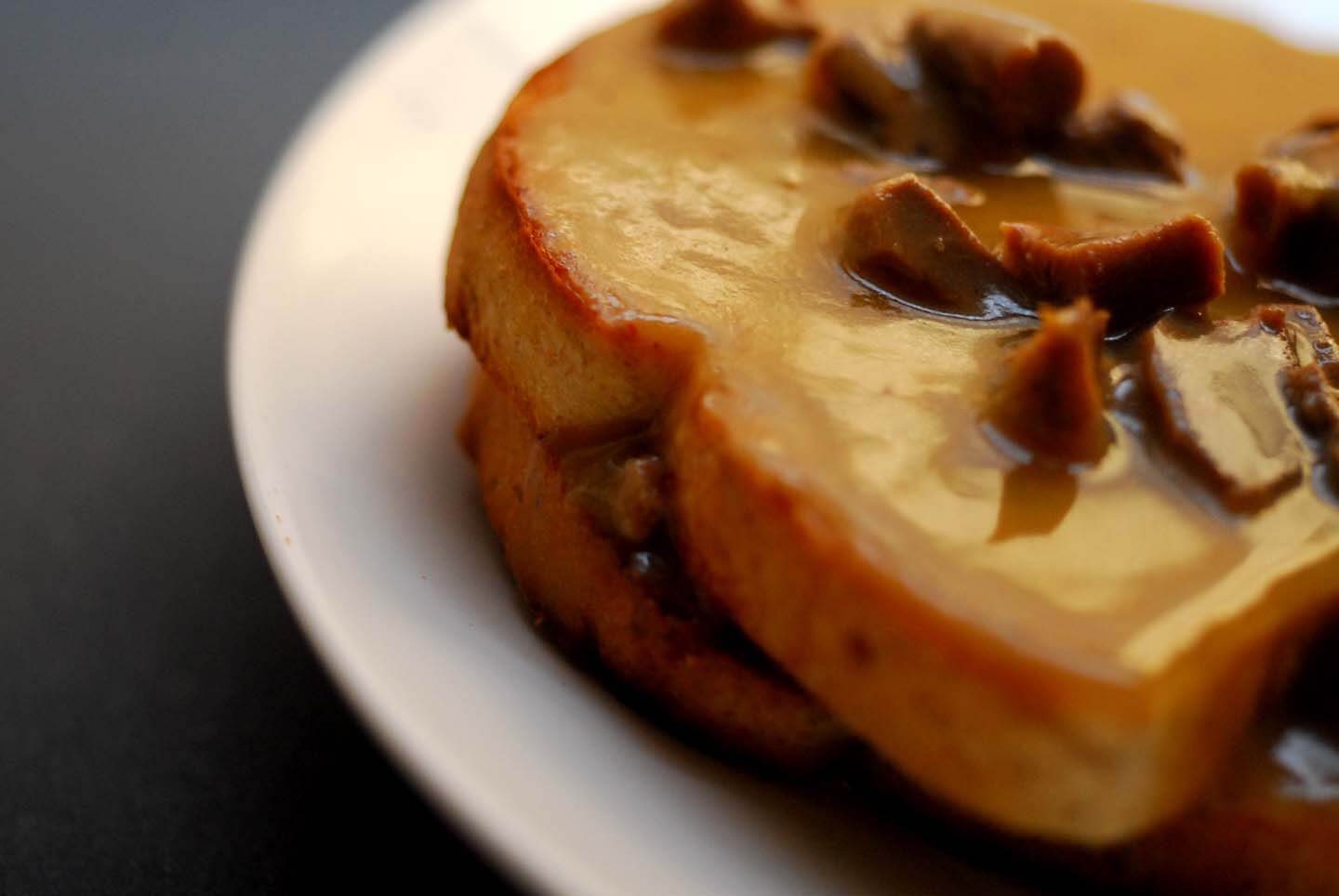
I then strained the stock, chopped the gizzard, liver, heart and neck meats, whipped up a roux, added the stock, some pan drippings, giblets and spices, and in no time I had a smooth, silky sauce that tasted like home. Giblet gravy goes great over anything—not just turkey—so I ladled a generous portion over some toast and it was a terrific treat. Matter of fact, that’s Dad’s favorite day-after-Thanksgiving breakfast and I can taste why.
So while I have much to be grateful for this year, I will be very thankful on Thanksgiving to not be on turkey duty—I’ll leave that to the experts and instead stick to what I do best—side dishes, desserts, and now, giblet gravy. Though I reckon the turkeys will go on sale again the day after Thanksgiving, and armed with what I know now, I plan on attempting to roast one again. Practice makes perfect, right?
What do you do with your giblets? Happy Thanksgiving!
—————-
Here are some of my other recipes perfect for Thanksgiving:
Pimento cheese
Mashed sweet potatoes with chipotles
Cranberry, orange and cilantro salsa
Pecan pie
Biscuits
Cornbread
—————-
Giblet gravy
Ingredients
- Giblets gizzard, neck, heart and liver, removed from turkey cavity and washed
- 1 medium yellow, onion, cut in half
- 1 stick of celery, cut into 4 pieces.
- 1 large carrot, peeled and cut into 4 pieces
- 4 cloves garlic, peeled
- 1 tablespoon kosher salt
- 1 teaspoon black pepper
- 1 bay leaf
- 1 stick unsalted butter
- 8 tablespoons all-purpose flour
- 1 1/2 teaspoons turmeric
- 1 1/2 teaspoons paprika
- 3 tablespoons Worcestershire sauce
- 1 cup turkey pan drippings
Instructions
- Place the giblets in a pot with the onion, celery, carrots, garlic cloves, salt, pepper, and bay leaf, and cover with 8 cups of water. Bring to a boil, and then turn heat down to low, simmering the stock for an hour and a half, stirring occasionally.
- Remove giblets and chop meat into small cubes. Remove aromatics and strain the stock (should have about 5 cups).
- To make the roux, in a pot heated on medium-low, melt the butter and then slowly add the flour. Constantly stir the flour and butter for about 10 minutes, or until the mixture is golden and tan.
- Add the giblet stock, chopped giblet meat and pan drippings, and then add the turmeric, paprika, and Worcestershire sauce. Turn the heat up to medium-high and bring to a boil. (Dad uses Lawry’s Seasoned Salt instead of the turmeric and paprika, and if you prefer, you can use it, too.)
- When mixture boils, quickly turn heat back down to medium-low and continue stirring until thick. Adjust seasonings to taste. Serve warm.

What’s the point of turkey gravy without giblets? I adore those chewy little bits, and have often wished I could buy two turkeys’ worth to make extra-chunky (not lumpy) gravy. My mother’s side of our family are staunch advocates for adding chopped hard-boiled egg; I’m with my paternal line on this one.
While I insist on making the side dishes for Thanksgiving (so that I’m assured of having cornbread dressing and sweet potatoes the way I want them), my Yankee husband roasts the turkey. I have no idea how he does it. Good luck with your next attempt, and happy Thanksgiving!
Delightful proof that gravy is an institution all in itself… When I was growing up, if mashed potatoes ever appeared on the supper table without gravy alongside, my grandmother would protest that this travisty was worse than no mashed potatoes at all!
– Astra Libris
The gravy sounds groovy. I remember the first time we roasted a turkey. It involved an emergency thaw in the bathtub and a paper bag set on fire in the oven (don’t ask.)It could only get better from there (and it did!) Happy Thanksgiving!
Who knew turkeys have two cavities? Not me! I’ve never cooked a turkey in my life; my husband is always in charge of the turkey. And I’ve never made gravy — also my husband’s job, unless my mother is here. My mother is not a good cook at all but she makes a wonderful gravy.
We’re going to a friend’s house for Thanksgiving this year and he’s cooking a turkey for the first time. Since my mother won’t be there, I’m printing out your gravy recipe for him.
Hope you have a great visit to Texas and a very happy Thanksgiving!
What’s your favorite Pecan Pie recipe? I always use the one on the Karo syrup bottle! My food snob friends think it’s the best, I’d never tell them it’s source!
NC Texan