
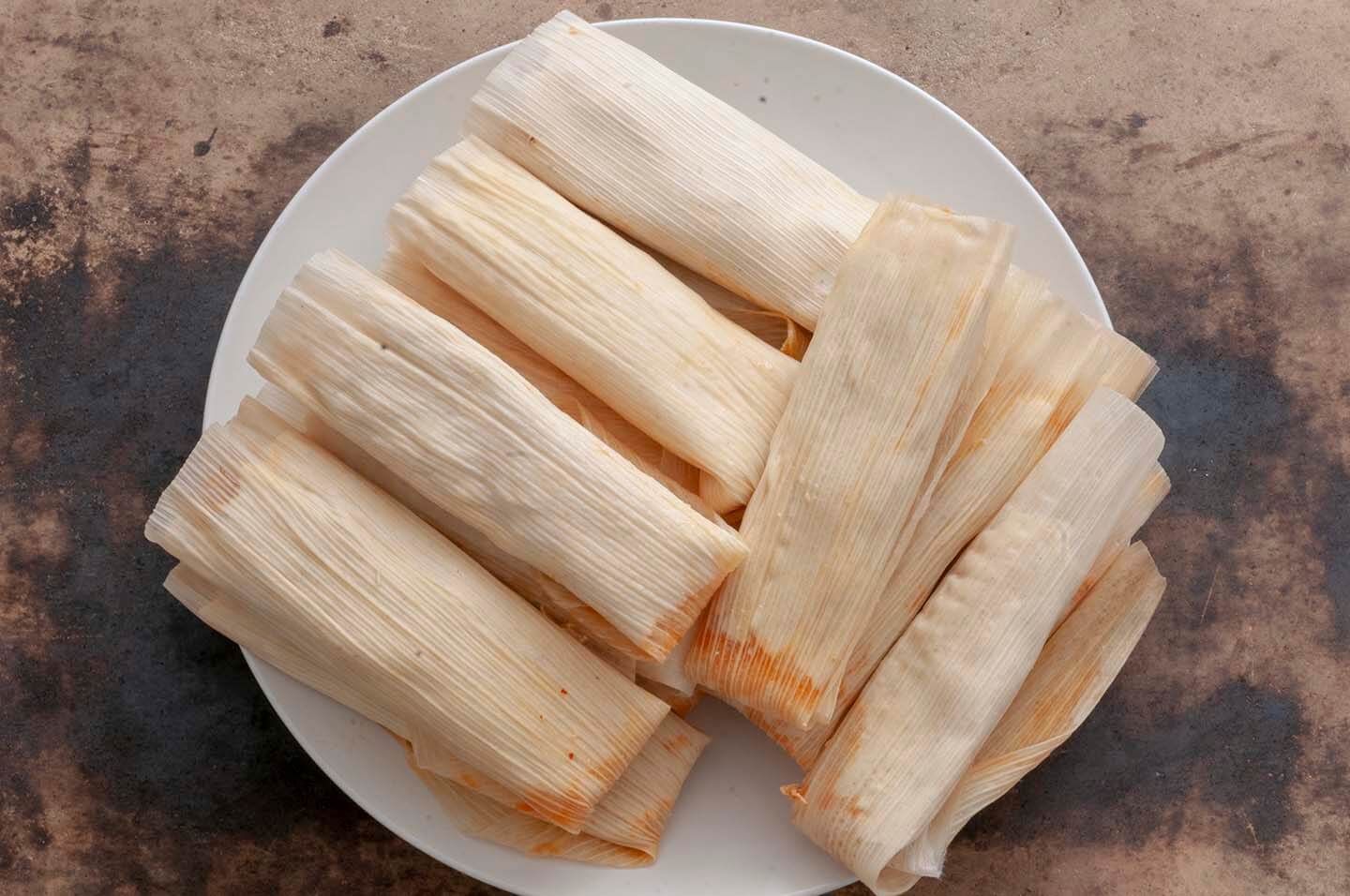
Let’s make tamales: part 1
Back in September, the delightful Wednesday Chef cooked a Regina Schrambling recipe for tamales. She was not impressed. No disrespect to Ms. Schrambling, but the recipe was a mess from the get go. It was supposed to make tamale-making simple by substituting grits for masa, but there is no easy way to the culinary bliss that is a tamale.
Ever since I read that post, the blogging side of my brain has been begging to write something on the subject. And now that December is upon us, there’s no better way to present a post (or two or three) on tamales than to wrap it up in holiday garb.
Why do I write about tamales now? Easy answer—tamales are a traditional holiday food in Texas and the Southwest. And while you can buy them just about anywhere in that part of the country, they are traditionally made at home. And one of the best hallmarks of the season is having a tamalada or tamale party.
Why would you devote a whole party to making tamales? Simple: they’re very labor intensive. They’re not difficult to make, but much time is needed and the more hands on deck the merrier.
Preparation is everything with a tamale party. First, fill your guest list with people who like to work with their hands, cook and eat. It’ll be no fun if you invite a group who’d rather be playing Scrabble. Second, you’ll need to do a lot of cooking and shopping before the big day, otherwise you’ll never get to the main event itself—rolling and steaming the tamales. Dishes to prepare before the party would be your tamale masa, fillings and sauces. You should also have bought plenty of dried corn husks (sure, it could be considered cheating but corn is out of season and it’s easier to work with dried husks than fresh ones).
Masa is the base of your tamale. Traditionally, masa was made with lard, but you can also use vegetable shortening. As for your fillings—anything goes. Think of the slab of masa as a blank slate, receptive to anything you wish to inscribe upon it. Traditionally, chicken, pork, cheese with rajas and dried fruit (for sweet tamales) are used. But you can also fill your tamale with beef, beans, grilled vegetables or chocolate. Whatever your heart (and belly) desires!
Finally, if you don’t own a tamalera (a pot designed for steaming tamales), make sure you have a large pot that can be fitted with a large steam basket. I use a pot that’s about two feet tall but your standard Dutch oven should suffice.
And that’s all you need to prepare. Now plug in your chile-pepper fairy lights, clear off your table, pull up some chairs and get ready to pat, stuff and roll. If you’ve never tried making tamales, this is a food rooted in fellowship; doing it alone is not only counter-productive but sorely lacking in fun. Rally your friends and family and get ready for not only a memorable meal but a whole lot of communal joy.
Next time, I’ll tell you how to assemble the tamales. But first, I’ll leave you with a recipe for your masa.
Tamale masa
Ingredients
- 2 cups lard or vegetable shortening
- 2 1/2 or 5 cups chicken or vegetable broth
- 5 pounds fresh masa or 6 cups masa harina
- 2 tablespoons kosher salt
Instructions
- Place the fat in a mixing bowl and beat until fluffy.
- If using fresh masa, use 2 1/2 cups broth. If using masa harina, use 5 cups broth. Add broth and masa or masa harina to the mixer, and beat until completely mixed—about 5 to 7 minutes or until the dough is thick yet malleable. Add the salt.
- You can test for doneness by throwing a small dollop into cold water. If it floats it’s ready, but if not, keep beating. Will keep in the fridge for several days.

I’m from San Antonio…born and raised TEXAN. I love tamales so much I’ve created over 40 new delicious flavors. I am a tamale party planner and enjoy hosting/teaching tamale cooking every year. I’ve been to New Mexico twice this year…the chilies are awesome but the tamales are not as good as mine. I would love to visit New York City and show them how simple homemade can be. There is no comparison between store bought and homemade anywhere in the world.
Thanks for the post! I threw my own El Paso-ex pat tamalada in Canada. I love & crave tamales and knew better than to try and buy them up here.
I love this post! I'm a Texas transplant (also an Air Force Brat) here in Minnesota. Believe me, finding Tex-Mex has been difficult – if not impossible. But this post does remind me of when I discovered that Hormel tamales weren't what authentic tamales really tasted like. My roommate introduced me to the tamale party making process. I came away (13-16 hours later) with a great appreciation for "authentic" tamales. The party was fun…the tamales out of this world!
Susan
Liked your post. I decided to get brave this year and try some myself.
I don't know if anyone ever answered they question as to the difference between Tex-Mex or Mexican tamales and Guatamalan ones.
Guatamalan tamales are wrapped in banana leaves, The masa mixture is also cooked like grits to the consitency of mashed potatoes. The assembly is different also. The filling usually includes the meat, spanish olives, capers and gound pumpkin seeds. Instead of rolling to create a wrapping of masa around the filling. Guatamalan tamales are done with a spoon of masa in the middle of the wrapper with a bit of the filling and then the banana leave is folded instead of rolled.
Steaming and eating is about the same. However, I prefer the more traditional corn husk tamale.