
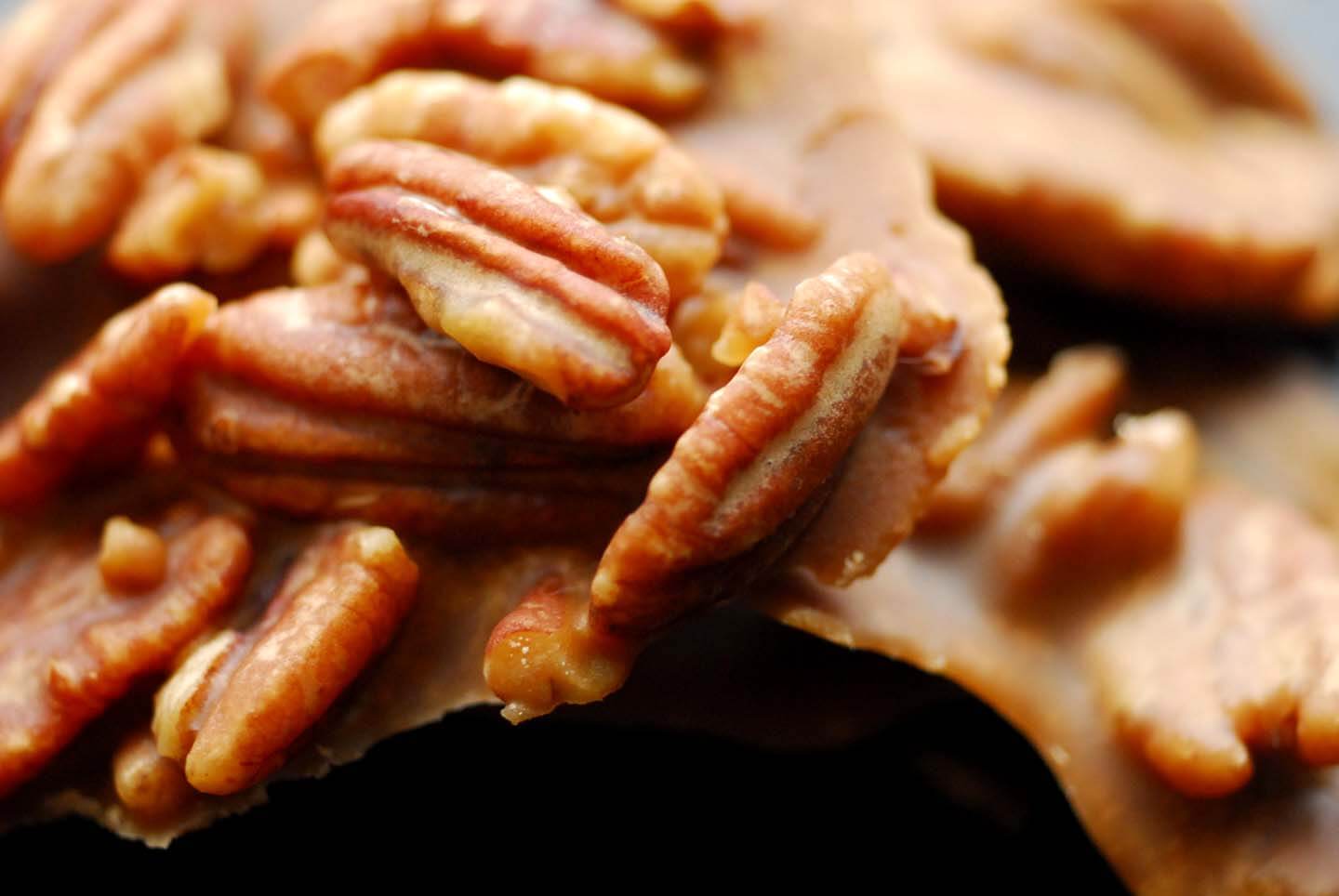
Praise the Texas pralines!
I come from a divided family. Yes, it’s true—half of us are Aggies and the other half are Longhorns. This makes for some interesting dynamics, especially on the occasion of the two teams’ annual scrimmage.
My family gathered at a Tex-Mex restaurant the day after Thanksgiving, traditionally the date of the big game. The room was filled with people sporting the two teams’ colors of maroon (Aggies) and burnt orange (Longhorns). Our group leaned towards the latter, though my grandmother sitting at the head of the table shook her head at her progeny’s disloyalty to her beloved Aggies. There was much anticipation over who would win, and we ate our food quickly in order to be able to watch the kick-off. In order to keep the peace, however, we avoided talking much about the two teams, though occasionally slight tempers would rise if there was a bit too much boasting.
But there was one thing everyone saw eye to eye on: the excellence of my aunt Julie’s pralines.
Throughout my brief trip to Texas, I kept hearing nothing but high praise for Julie’s version of this beloved confection. “They’re the best praline I’ve ever eaten,” said my cousin Jessica, and both my grandmother and other aunts concurred. As we concluded our meal, Julie pulled out a bag of the candy for me to take back to New York and after one bite I had to agree—she does indeed make the best pralines.
While it’s now common to see tres leches cake, fried ice cream, or crepes filled with cajeta or dulce de leche on a Mexican restaurant’s menu, when I was growing up, a Tex-Mex meal always concluded with only two options: sopapillas or pralines. I reckon you could say that the crisp, nutty praline was the yin to the pillowy, sticky sopapilla’s yang.
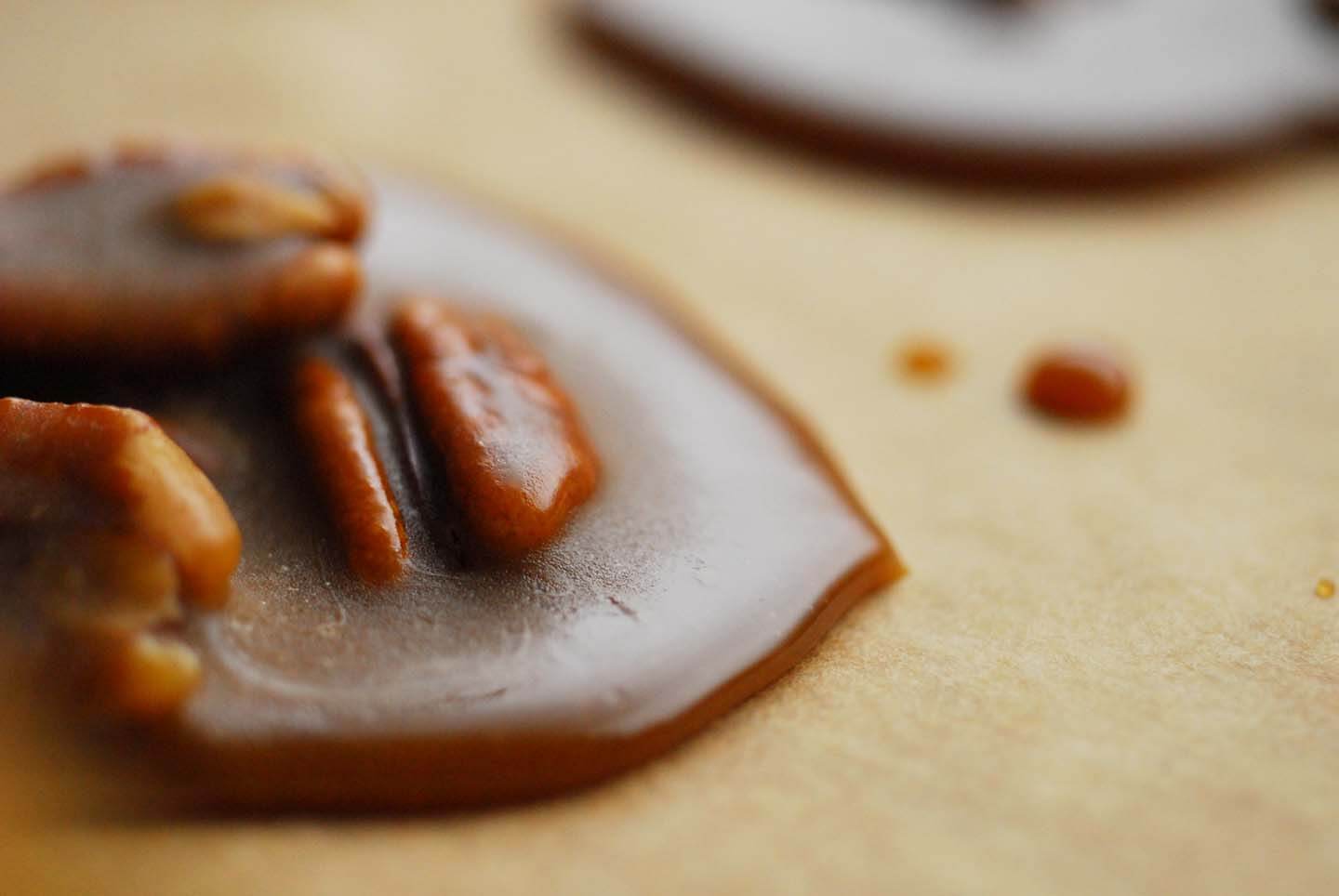
I always assumed pralines were from Mexico, but actually they’re French. Their origin is attributed to a seventeenth century sugar industrialist named Marshal du Plessis-Praslin, whose cook invented a candy made of melted sugar, cream and almonds. When the French arrived in Louisiana, they brought the recipe with them, but replaced almonds with the more widely available pecans. So as in Texas, Louisiana folk also have a fondness for pralines, though they pronounce it differently: where they say prah-leen, we say pray-leen.
It’s not quite clear how pralines made their way onto Tex-Mex menus, but as pecans were plentiful and the candy was inexpensive to make (its primary ingredients being just nuts and sugar), they soon became as Tex-Mex as chili gravy and nachos.
You don’t often see pralines here in New York City, and until Aunt Julie gave me her recipe, I had no idea how easy there are to make at home. There are two kinds of pralines most commonly found in Texas—the crisp and creamy ones I grew up with and the chewy ones you’re more likely to see today. I’m not too fond of caramels and super-sticky substances, so I’m more partial to the old-fashioned pralines where each bite shatters in your mouth, melting into a luscious, nutty sweetness.
I’m happy to say that Aunt Julie’s are the old-fashioned kind—crisp yet creamy. And it’s an old family recipe, of sorts, as she learned how to make them from her mother-in-law, Mrs. Jackson. They’re a cinch to make, and in under an hour you’ll have trays laden with these nutty candies perfect for sharing.
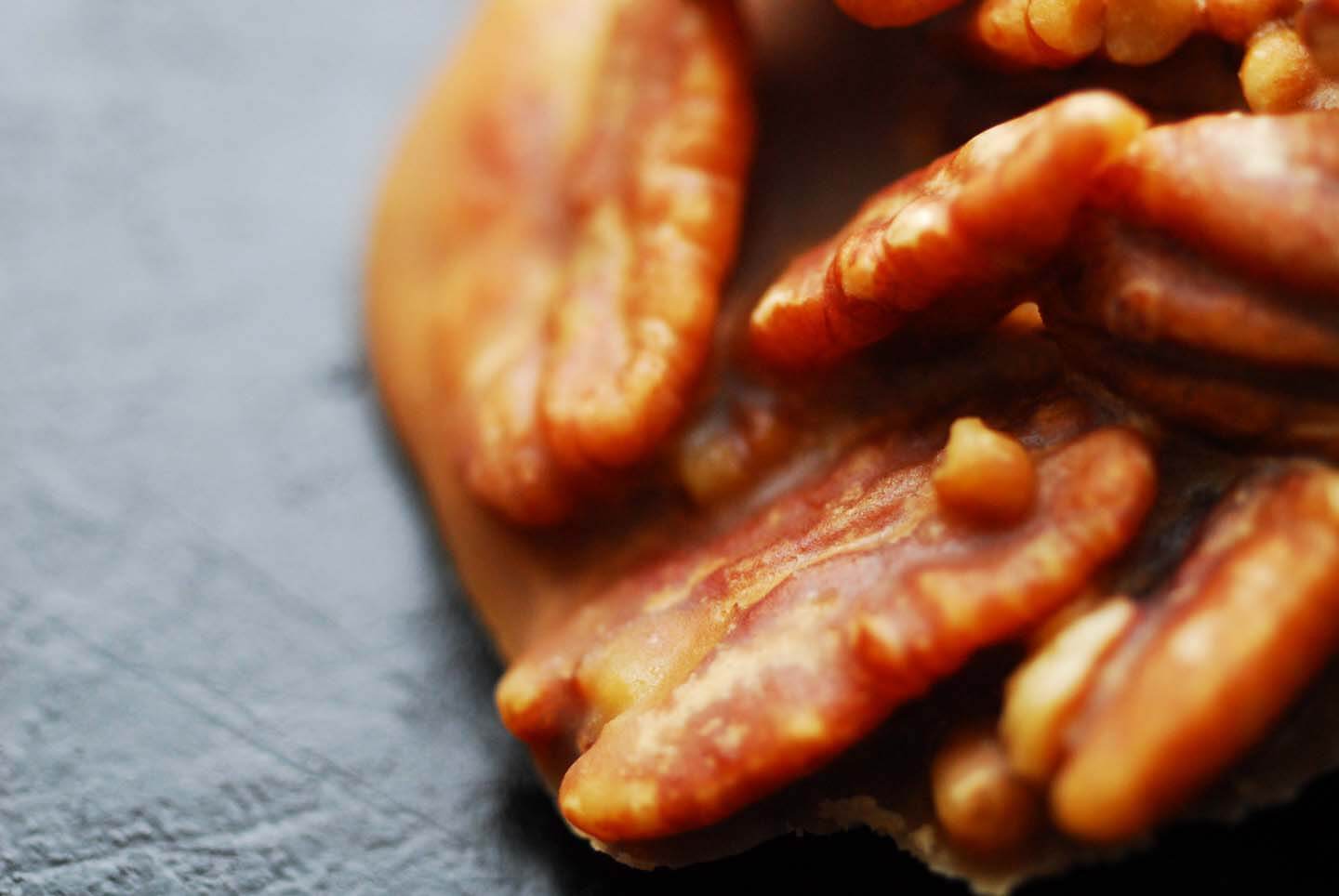
Pralines are, of course, welcome at any time, but there’s something about Christmas that makes these extra special as they make such a delicious gift or dessert. (Though now that I know how easy they are, I reckon I’ll be making them year round.) So go make some pralines—you’ll be happy that you did. And may you have a loving and joyful holiday filled with family and friends!
Texas pralines
Ingredients
- 2 cups white sugar
- 2 cups brown sugar
- 2 teaspoons vanilla extract
- 6 tablespoons light corn syrup
- 4 cups pecans
- 1 heaping tablespoon unsalted butter
- 2/3 cup milk
Instructions
- Mix all ingredients very well in a cold pan.
- Turn stove on medium high heat, and when mixture comes to a boil, cook and stir for 4 minutes. (If you use a candy thermometer, temperature should be 234F.)
- Remove from heat. Stir for about 1 minute or until mixture is not so glossy. Spoon pralines onto trays lined with foil or parchment paper. Let cool for about 20 minutes and remove. Can store covered for 1 week.

These look fantastic!
I am still on the hunt for a recipe for the candies that used to be in the bottom of the chip basket at Monterrey House(now Little Mexico). Mmmm
Ah, too bad I didn’t see this before Christmas :(. I guess I’ll make next week-end all the good recipes I missed for Christmas. Thanks for a yum idea!
Monterrey House candy – yummy! From what I remember being told when I was growing up – it was made similar to candy in Mexico that was made there wit goat milk and sugar, cooking the sugar down to carmelize (like dulce de leche) and then adding in the goat milk. Something simple and cheap to keep the kids happy. I think restaurants served it to help diners at the end of a spicy meal. Sugar and milk are both great for killing the heat from peppers.
I always remember they would be at the cashiers station wrapped in cellophane with one huge half pecan on top. It appears there are many variations on the same theme. Some have chopped or many pecans, others are more crusty and sugary than caramel flavored. Those were my favorites!!!
I’ve got an easy microwave praline recipe–mix 1 lb. brown sugar with one cup heavy cream. Cook on high in microwave for about 5 minutes, stir, and cook another 4 minutes (times may vary, depending on the strength of the microwave; finding the best time may take some trial and error–but the errors can result in some tasty treats, too). Take the mixture out and stir in 2 Tbs. butter, 1 Tbs. vanilla, and 1 C pecan halves. Stir until the mixture starts to thicken slightly (and if it clumps up, you can add a couple of Tbs. of water or bourbon), and the spoon dollops onto slightly greased (Pam-ed) foil.