
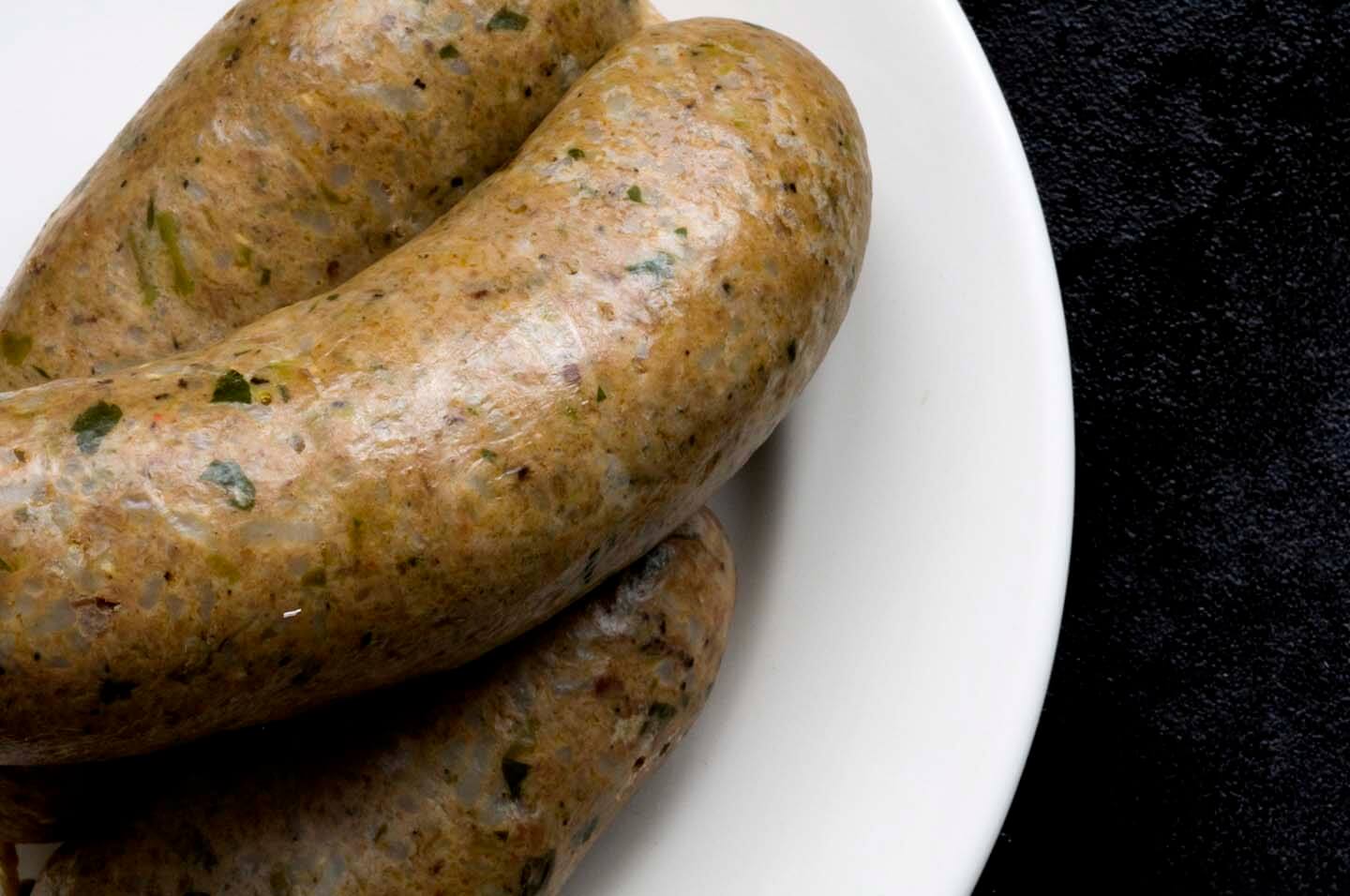
Boudin (boudain) recipe, a pork and rice Cajun sausage
A few years ago, a friend was visiting Toronto and found a Cajun store. He had grown up in Louisiana, so he called me, thrilled that he had discovered a source in the Northeast for some of his favorite Cajun ingredients. And yes, on hand were plenty of Cajun spices, store-made gumbos, and alligator meat. But the one thing this store didn’t have was boudin—a Cajun sausage that you also can’t find in New York.
“No boudin?” I said. “That’s a shame. Perhaps I should just try to make it myself.”
It took me a while, but five years later I finally did.
Boudin (also spelled boudain), if you’re not familiar with it, is a sausage that’s stuffed with pork, liver, rice, and a host of aromatics and spices. It’s what fuels road trips heading east on I-10 from Houston into Louisiana, as almost every gas station worth its salt will have poached or smoked boudin on hand, ready for snacking.
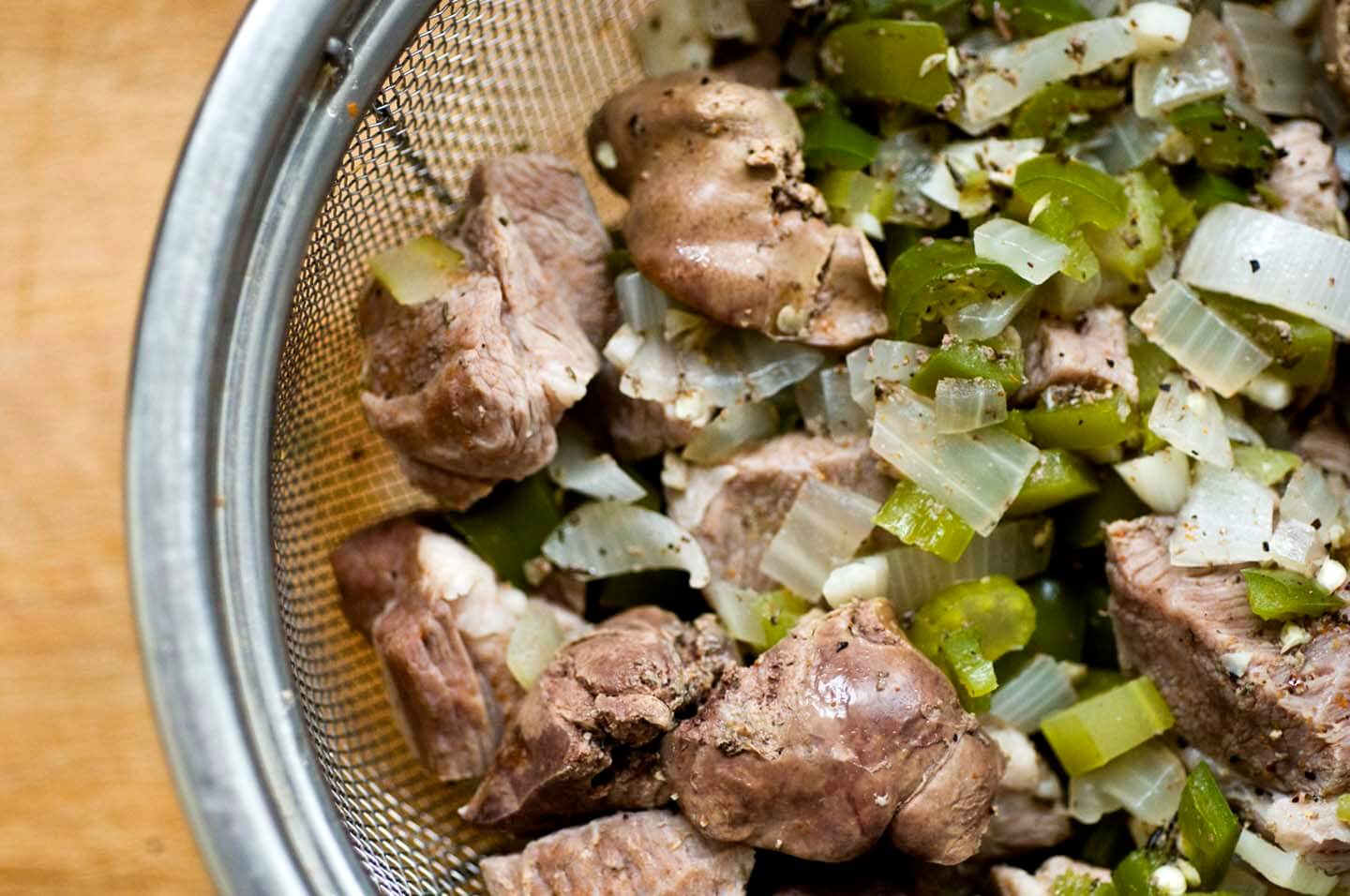
After you fill up the tank and stretch your legs, you grab a link, lean against the counter and squeeze the sausage until the filling oozes out the end, like toothpaste out of a tube. You take a big bite, wash it down with a cold beverage and continue eating until nothing but the casing remains. (The casing, which most don’t eat, is thrown away.) Of course, there are some fastidious types who prefer to eat boudin with a knife and a fork, but where’s the fun in that?
While it’s a Cajun dish, boudin is also found in Southeast Texas where the cultures of Louisiana and Texas collide. I’m partial to boudin that’s found at gas stations, but you can also buy it at meat markets, seafood shops, and grocery stores. You’ll seldom see it at proper sit-down restaurants, however, as boudin is regarded as stand-up, on-the-go food. And that’s probably why you don’t see it outside the Southeast Texas/Louisiana region, as even though there may be Cajun restaurants, boudin is not usually part of their repertoire. This used to upset me, but it’s no longer an issue since I’ve learned that the best boudin can be made at home.
The basic recipe for boudin is a mix of finely diced cooked pork, chicken or pig’s liver, rice, bell pepper, celery, green onions, parsley and cayenne. From that base you can tailor it any way you wish. I like to add a bunch of jalapeños to mine, and I know people who will throw in some shrimp and crawfish, too. Boudin is usually poached though you can smoke it, as well.
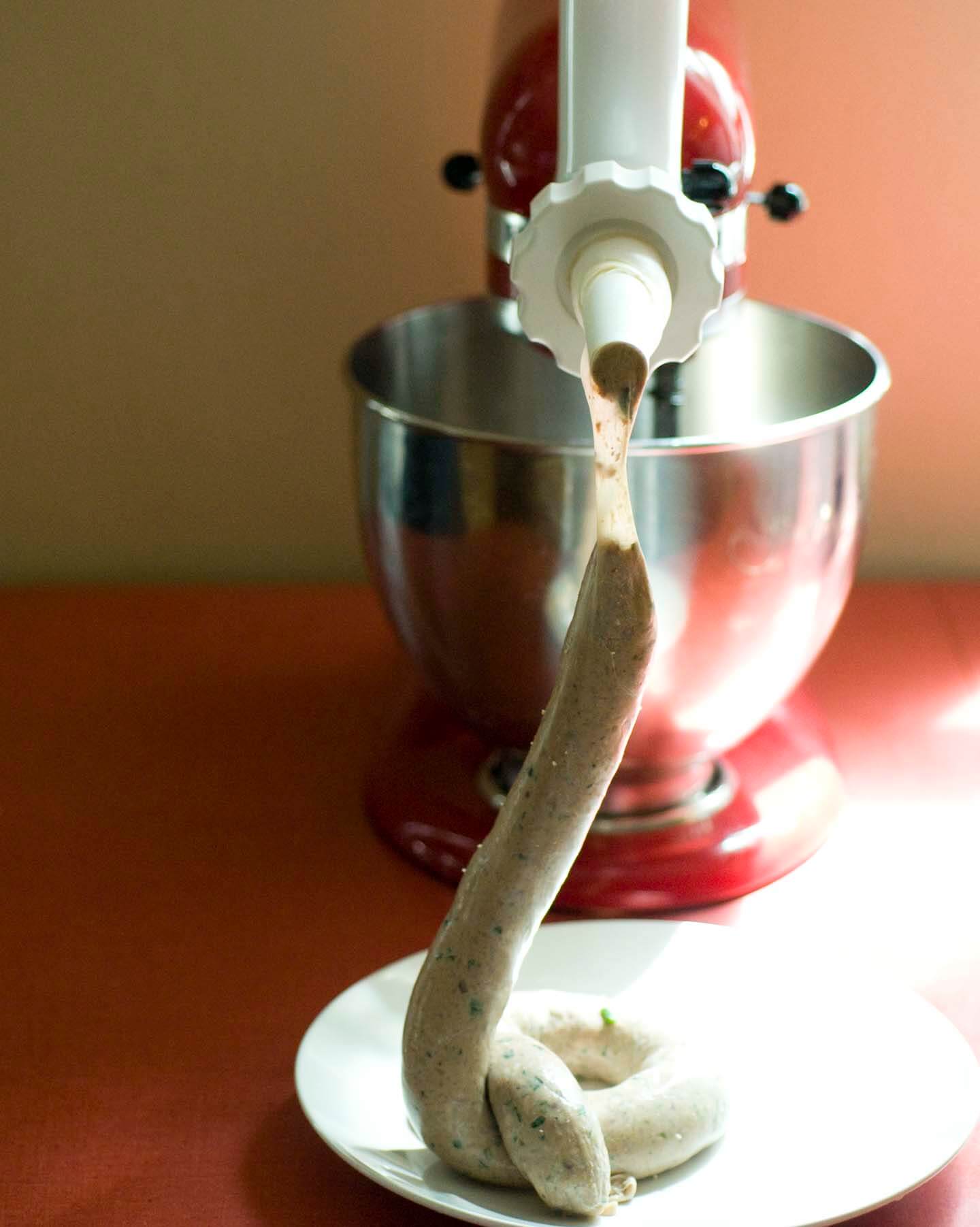
Making a batch of boudin is a snap—the most difficult part of the process is stuffing it into the casing. Though if you don’t have a sausage stuffer, you can still eat the filling as a dressing, or whip up a batch of boudin balls, which are rolled portions of the filling that have been dipped in crushed crackers and fried.
Now, while I associate boudin with quick stops on the road, it’s also mighty fine for home eating. It’s terrific to serve to friends when you’re watching the big game, and at holidays, my family has been known to add it to our festive buffet. But no matter when or where you eat boudin, know that you’re in for a spicy filling treat.
—————
Would you like more Homesick Texan? Well, I’ve started offering additional recipes for paid subscribers to help with the costs of running the site. While I’m not taking anything away, if you’d like to support Homesick Texan and have access to exclusive, never-seen-before subscriber-only posts, please consider becoming a member; annual subscriptions are as low as $25. Thank you for reading, your consideration, and your support!
—————
Boudin (boudain), a pork and rice Cajun sausage
Ingredients
For the boudin:
- 2 pounds pork shoulder, cut into 1-inch pieces
- 1 celery rib, diced
- 1 medium yellow onion, chopped
- 4 cloves garlic, minced
- 1 bell pepper, seeded and chopped
- 1 tablespoon kosher salt
- 1/2 pound chicken livers
- 2 cups cooked rice
- 2 jalapeños, seeded and chopped
- 1 teaspoon dried thyme
- 1 teaspoon dried oregano
- 1 teaspoon paprika
- 2 green onions, chopped (green part only)
- 1/2 cup parsley, finely chopped
- 1 teaspoon black pepper
- 1/2 teaspoon cayenne
For the stuffed sausage:
- 4 feet of hog casing, sized 32/35mm
- 1 tablespoon vegetable oil
- A sausage stuffer
Instructions
- Place the pork shoulder, celery, onion, garlic, bell pepper, and salt into a large pot. Cover with 2 inches of water, bring to a boil and then turn down the heat and simmer uncovered for 1 hour. After an hour, add the chicken liver to the pot and continue to cook for 45 more minutes or until the pork is tender.
- Strain the meat and vegetables, reserving the liquid. Finely dice the meat and vegetables with a knife, in a food processor or in a meat grinder set for a coarse grind. Once diced, place meat and vegetables in a bowl.
- Add to the bowl the cooked rice, jalapeños, thyme, oregano, paprika, green onions parsley, black pepper, and cayenne. Stir in 1 cup of the reserved cooking liquid and combine until the filling is moist and slightly sticky. If it appears too dry, add more of the reserved liquid. Taste and adjust seasonings, if needed.
- To stuff into casings for sausage, first rinse the outside of the casing and then place it in a bowl of water for 30 minutes to soften. Drain the soaking water and then rinse the inside of the casing by placing one end on the kitchen faucet, turn the water on low and allow it to flow through the casing. The casing will blow up like a balloon—this is fine.
- Lightly oil the stuffing horn on your sausage stuffer with vegetable oil. Tie a knot at one end of the casing. Take the other end and gently slide the entire casing onto the horn, leaving the knot plus an additional 4 inches hanging off the end of the horn.
- Place the filling into the feeder and push it through until it starts to fill the casing. Go slowly at first and note that you’ll need to massage the casing as the meat goes through it so it fills the casing evenly.
- Once you’ve filled the casing, to form links, pinch it every 5 inches and then twist it until it’s secure. You can then cut the casing to form individual sausages.
- To cook, poke holes into the casing then then poach in boiling water for 10 minutes. You can also grill or smoke the boudin.
- Alternatively, you can either serve the filling as a dressing, or you can roll it into walnut-sized balls, dip into finely crushed crackers and fry in 350 degree oil for 2 minutes or until brown to make boudin balls.

Growing up in Houston and later Louisiana, my Dad would heat up a link of boudin for us to snack on while he taught me my way around the kitchen. We always ate it on saltines with a few drops of Louisiana Red or Tabasco. Now I am a temporary Okie and for the Super Bowl last year I had a Cajun feast in honor of my Saints – the boudin was the biggest hit of the party, even for my dear Okie friends who aren't very adventurous eaters. We do have a great little Cajun market here, but now I can't wait to try making my own! Thanks so much for sharing!
Also, thanks for giving me an excuse to buy the sausage attachment for my mixer!
I live in California, and sadly "real boudin" is no longer available here. CA Health Code disallows the placing of cooked items in an uncooked casing prior to it being sold, so the provider we used to buy it from has decided to only offer the 'stuffing' for sale in bulk form.
The bulk boudin I'm purchase I use for stuffing chickens or pork chops, and I also make it into patties for cooking. The formed patties are chilled until firm, then dredged in flour, coated in egg wash, and rolled in bread crumbs and pan fried in olive oil. The difference is the meat and rice in the bulk boudin is completely cooked, so it can simply be pan fried and be safe to eat.
There are a few providers that DO sell boudin in link form, but it is completely uncooked (with the exception of the rice, which is cooked and cold stuffed).
These links have to be cooked prior to eating as if they are simply a raw product. I typically place them in a covered frying pan with a small amount of water and cook them for 15-20 minutes over a medium heat, turning occasionally. I then pour off any remaining water, and return the pan to the stove, add a few tablespoons of olive oil, cover the pan and cook about 15 minutes longer, turning once or twice.
I've made venison sausage for a while and it is so yummy…I seriously need some of that Boudin in my life. It may mean that I have to go on a road trip this spring, but well, if that's the only way….
I love road food, my very favorite being 7-11 Conch fritters in the Florida Keys…
Do you think you might be able to dig up the name of the Cajun store in Toronto for those of us in Toronto ?
Would love to be able to buy some alligator meat, especially after watching "Swamp People" on History Television. Might even try some boudin too.
I've always been partial to DJ's Boudain (even going so far as to stock up on it ever time we visit home…we have a freezer full of the stuff). I don't care much for the MSG in it though. This post makes the whole process of making your own (MSG free) boudain seem much less threatening. I hope you post about pistolettes soon too.